
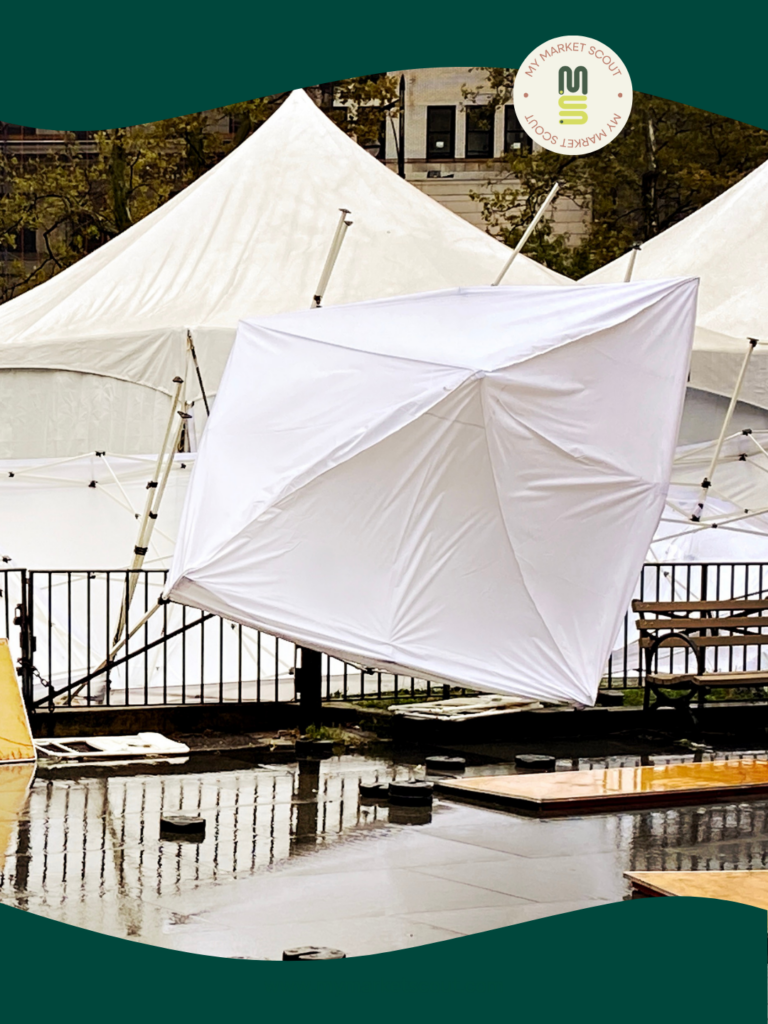
Nothing changes the energy of a market faster than a tent trying to lift off like it’s headed for the next province. Wind is unpredictable, sneaky, and has zero respect for your booth layout. Unlike rain, you can’t just “wait it out.” Managing wind takes awareness, communication, and knowing when to take action.
Here’s a practical, real‑talk guide for both organizers and vendors on handling wind safely and confidently.
Start With the Forecast
When planning an outdoor market, wind deserves as much attention as temperature or precipitation. Pay attention to sustained wind speed, gust speed, the direction it’s coming from, and when the strongest parts of the day will hit.
Sustained wind might feel manageable. Gusts are the troublemakers. Personally I always look at the weather forecast the day before the market and I include the link in the vendor info e-mail.
Tent Weights: The Bare Minimum
Tent weights aren’t optional, decorative, or something to “grab later.” If they’re not attached, they don’t count. A good rule of thumb is at least 25 to 30 pounds per leg, and more if your tent is big or if you get prairie‑style wind blasts.
Weights should attach to the tent legs, not swing from the roof frame. Milk jugs don’t count. Bags that just lean against the tent legs don’t count. If it wouldn’t stop a toddler tugging on your tent leg, it won’t stop a gust either. My personal favourites are big water jugs and the DIY sand-filled PVC pipes. In a pinch anything heavy is better than nothing at all, coolers, heavy bins, gym weights or cylinder blocks aren’t pretty but get the job done.
When Weights Aren’t Enough
Even properly weighted tents can become unsafe in strong gusts, so it’s important to know when to escalate.
• Light to moderate gusts: tighten straps, straighten legs, secure displays.
• Stronger gusts: take down lightweight signage, drop anything tall or wobbly, move breakable items lower, remove sidewalls and big banners. This is also the time to begin the “be ready” communication: “If gusts increase, you need to remove your canopy or the entire tent”.
• Unsafe gusts: remove the tent canopy completely. Yes, the top can come off while the frame stays standing. It significantly reduces risk.
This isn’t dramatic; it’s responsible. A flying tent can injure people and take out a whole row of booths. After all, vendors are there to sell their products and not to present their best performance as a human tent weight.
“We will just share our weights…”
It’s a common situation, one vendor forgets to bring weights and their neighbour offers to help out by attaching their weights to two tents. However, when two tents are tied together and share the same set of weights, the weight isn’t “helping both.” It’s being divided in half. So instead of each tent getting the recommended 100–120 lbs total, they’re basically splitting one tent’s worth of ballast.
More surface area + the same amount of weight = way less stability.
And here’s the kicker: When one tent catches a gust, it doesn’t just lift itself, it yanks the other tent with it. So now you’ve got two unstable tents acting like one giant sail.
When to De‑Canopy
Vendors should know how to remove their canopy before market day. Signs that it’s time to do it include the tent legs lifting, the canopy snapping or stretching, or organizers issuing a wind advisory. Removing the canopy early is far easier than trying to wrestle it off while it’s flapping like a parachute. It is one of the things that can be done easily, safely and it is one of the most effective wind‑mitigation steps. Without the top, the tent frame becomes a low‑risk structure instead of a parachute. Yet many people don’t think about it.
Securing Displays
It’s not just the tent that’s at risk. Displays need attention too. Use bins or crates as added weight to displays. Clip tablecloths. Avoid tall shelving unless it’s weighted. Secure signs to the tent frame, not the canopy. And keep glass or fragile items away from the tent edges.
Market Layout Matters
Organizers can soften the effects of wind by designing aisles smartly. Avoid long straight lines directly facing the wind. Use food trucks or trailers as natural buffers. Place heavier vendor booths in more exposed areas and lighter vendors in more protected spots. A thoughtful layout can reduce chaotic gust tunnels.
Communication Is Everything
Wind management depends on clear communication. Organizers should share a wind plan during setup, including when to remove canopies and how they’ll share updates. Vendors should secure their own setup first, then help others, it’s a very natural thing to wanting to help but remind people to only leave their booth if it is safe. A calm, coordinated response keeps the whole market safe, start with using clear language such as “Please remove the canopy now, this is not optional but for public safety”.
After the Wind Passes
Once conditions settle, check for damage, loose frames, or displays that shifted. Look at the rest of the day’s forecast so you don’t get caught off guard again. After the event, organizers can debrief and update their wind plan for future markets.
Final Thoughts
Wind will always be a factor in outdoor markets. But with the right preparation and a shared plan, vendors and organizers can turn a potentially chaotic situation into a smooth, safe, community‑focused response. A calm market is a successful market and nothing feels calmer than tents that stay on the ground.
Lettuce talk soon,
Isabel
P.S. behind My Market Scout is no big tech company, no investors, just myself. I’m working everyday on building a tool that supports and serves many markets and vendors.